


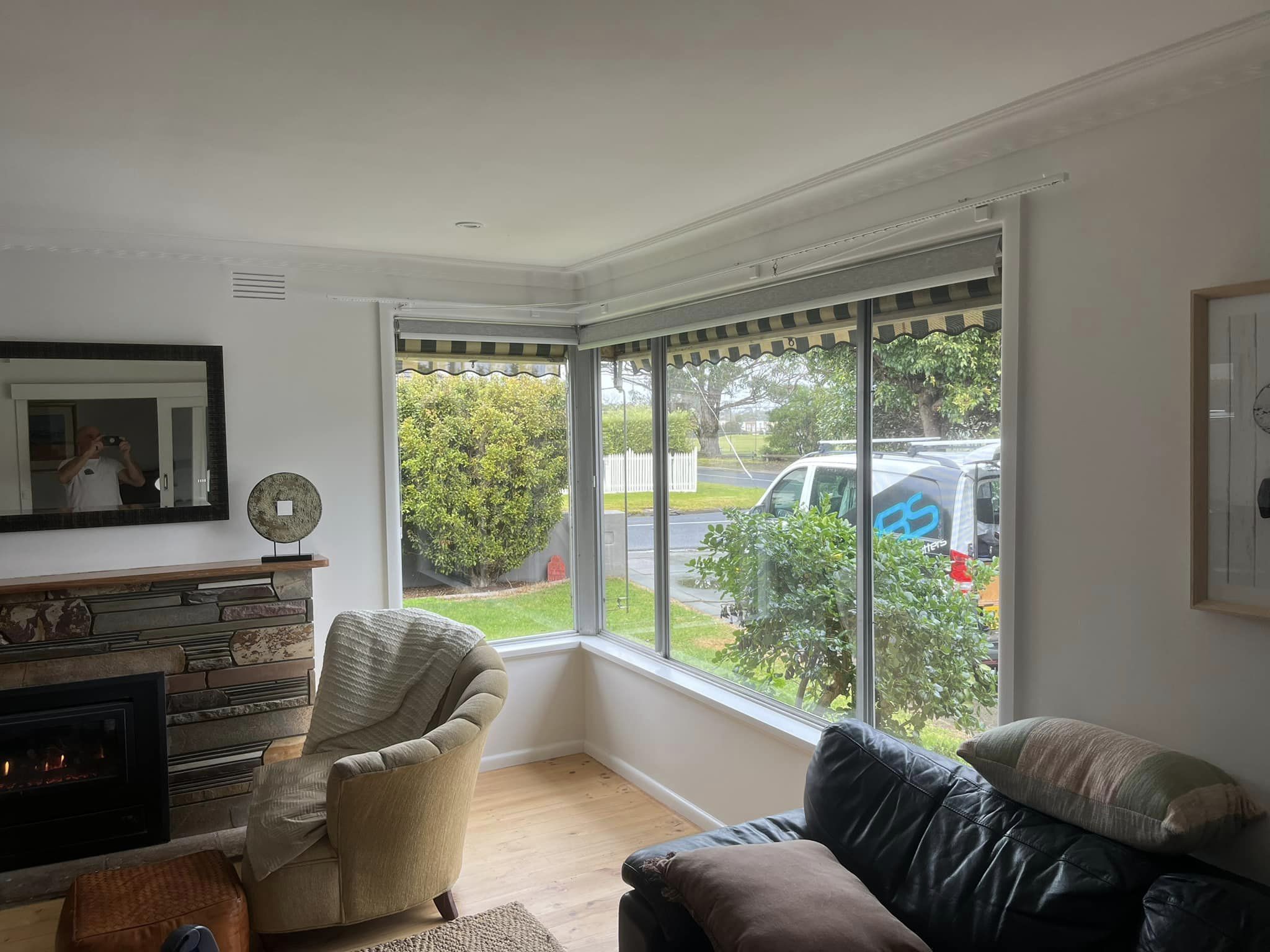
Short answer: yes, you can have motorised blinds in an established home without rewiring a thing. Modern blind motors are battery-powered, recharge from a standard USB charger a couple of times a year, and are controlled from a remote, a wall switch or your phone. Motorisation is fitted at the blind, not the house — so a retrofit is really just a new roller blind with a motor inside the tube, installed the same day as any other blind.
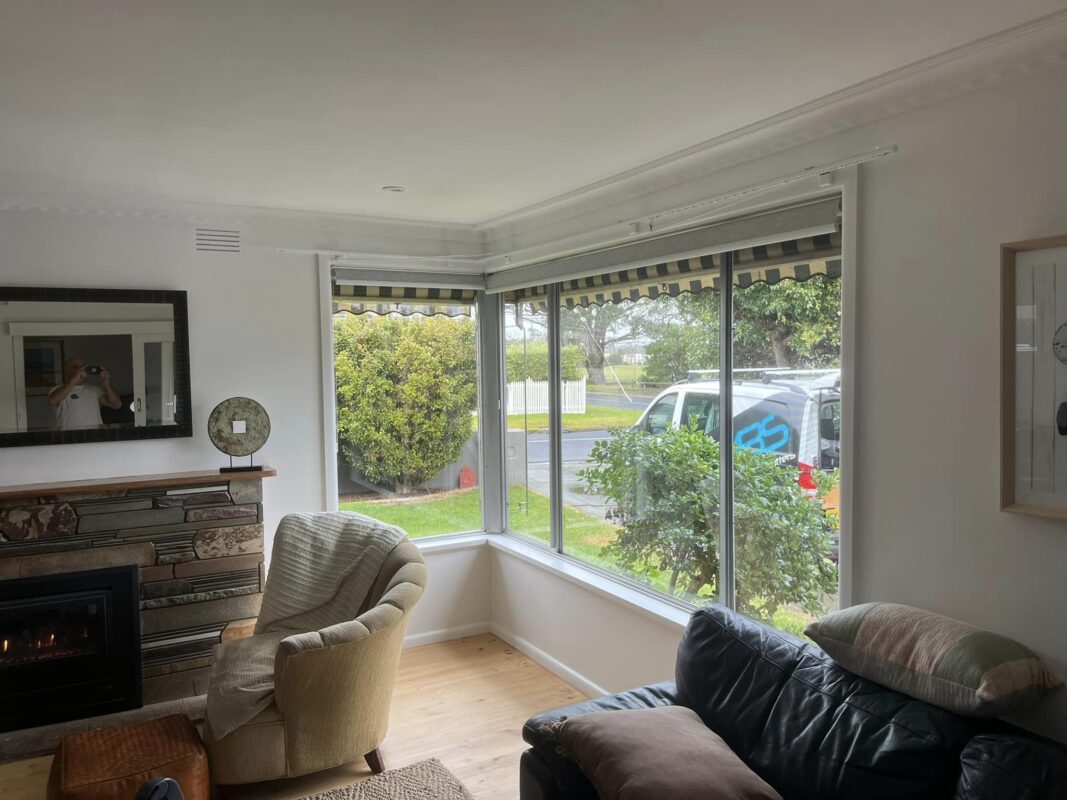
Battery or hard-wired?
Battery motors suit almost every retrofit: no electrician, no chasing cables through plaster, and current batteries hold a charge for months of normal use. Recharging is a USB cable a couple of times a year.
Hard-wired motors make sense mainly in new builds and renovations where the walls are already open, or on very large or very frequently cycled blinds. If you are renovating anyway — common across Langwarrin and Frankston at the moment — it is worth deciding early so the electrician can rough in power while the plaster is off. Deciding after the walls close means battery, or a visible cable.
What can motorised blinds connect to?
At the simple end, one remote runs one blind or a whole wall of them. From an app you can set schedules — bedroom blockouts down at dusk, sunscreens down through the hot afternoon — and current systems integrate with the main voice assistants.
We fit Acmeda componentry, which is the same hardware we use across our manual roller blind range, and we configure the system at installation rather than leaving you with a manual.
Our advice on the smart-home side is unglamorous but earned: get the remote and the schedules working first, then add voice control if you will actually use it. Plenty of customers never move past the wall switch, and that is a perfectly good outcome.
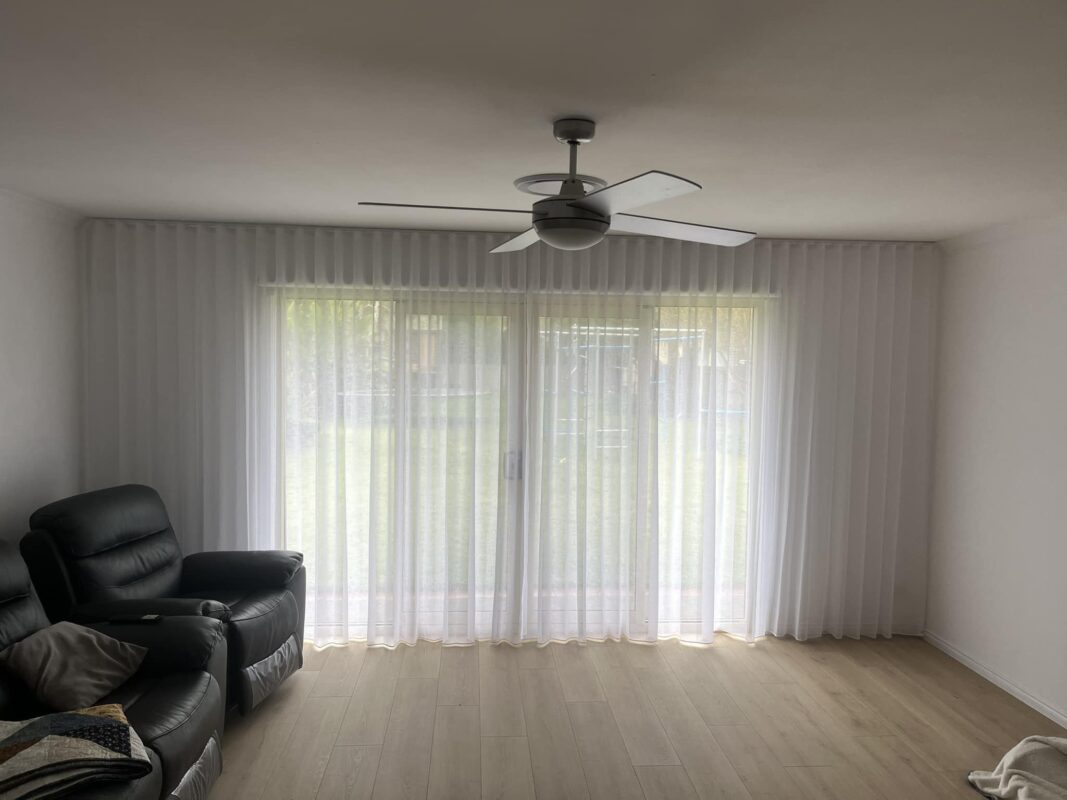
Which windows justify the cost?
- High windows and voids you currently need a pole or a ladder to reach. Motorisation is the difference between having blinds and using them — an unreachable window ends up permanently open or permanently shut.
- Wide banks of glass facing the bay. One button beats walking a row of chains, and scheduled operation protects floors and furniture from UV even when you are out. This is the common case in Mount Martha and along the escarpment.
- Bedrooms, for the schedules alone. Blockouts that lower themselves at a set time do more for sleep than any other single upgrade.
- Anywhere cords are a concern with young children. A motorised blind has no operating cord at all.
- Holiday houses and weekenders. A timer makes an empty house look occupied and protects the interior between visits.
What does motorisation add to the price?
Motorisation is priced per blind — the motor replaces the manual mechanism — plus the remote or hub. On a multi-blind job the per-blind step is smaller than most people expect, because the control side is shared across the whole job rather than repeated.
Rather than quote a range that may not match your windows, we do something more useful: we quote the same blind both ways, manual and motorised, on the same itemised quote. You see the difference line by line and decide window by window. Most homes end up with a mix, which is usually the right answer.
Common questions about retrofitting motorised blinds
Can you motorise the blinds I already have?
Occasionally, if the existing tube and brackets are compatible with a current motor. More often the existing hardware is too old or a non-standard size, and a new blind costs little more than the retrofit would. We tell you which applies at the measure rather than guessing.
How often do the batteries need charging?
Months rather than weeks under normal use — typically a couple of times a year. Charging is a USB cable at the blind. Blinds that cycle several times a day, or very large heavy blinds, draw more and may suit a hard-wired motor instead.
Is it noisy?
Modern motors run quietly enough that a bedroom blind on a dawn schedule will not wake you. They are not silent, but they are a long way from the older generation of blind motors.
What happens if a motor fails?
The motor is replaced within the existing tube rather than the whole blind, so it is a repair rather than a re-fit. Fabric and hardware stay where they are.
Do I need an electrician?
Not for a battery retrofit — that is the entire point of it. Hard-wired motors do need power run to the window, which is an electrician’s job, and is why we recommend deciding during a renovation rather than after.
Are motorised blinds worth it in every room?
No, and we will say so. For standard windows within easy reach, a manual blind costs less and does the same job. Motors earn their keep on high, wide or hard-to-reach glass and in bedrooms where a schedule genuinely improves your day.
Find out whether your windows are worth motorising
Book a free measure and we will tell you straight — including where manual is the right answer. Call 0418 994 068 or enquire online.