


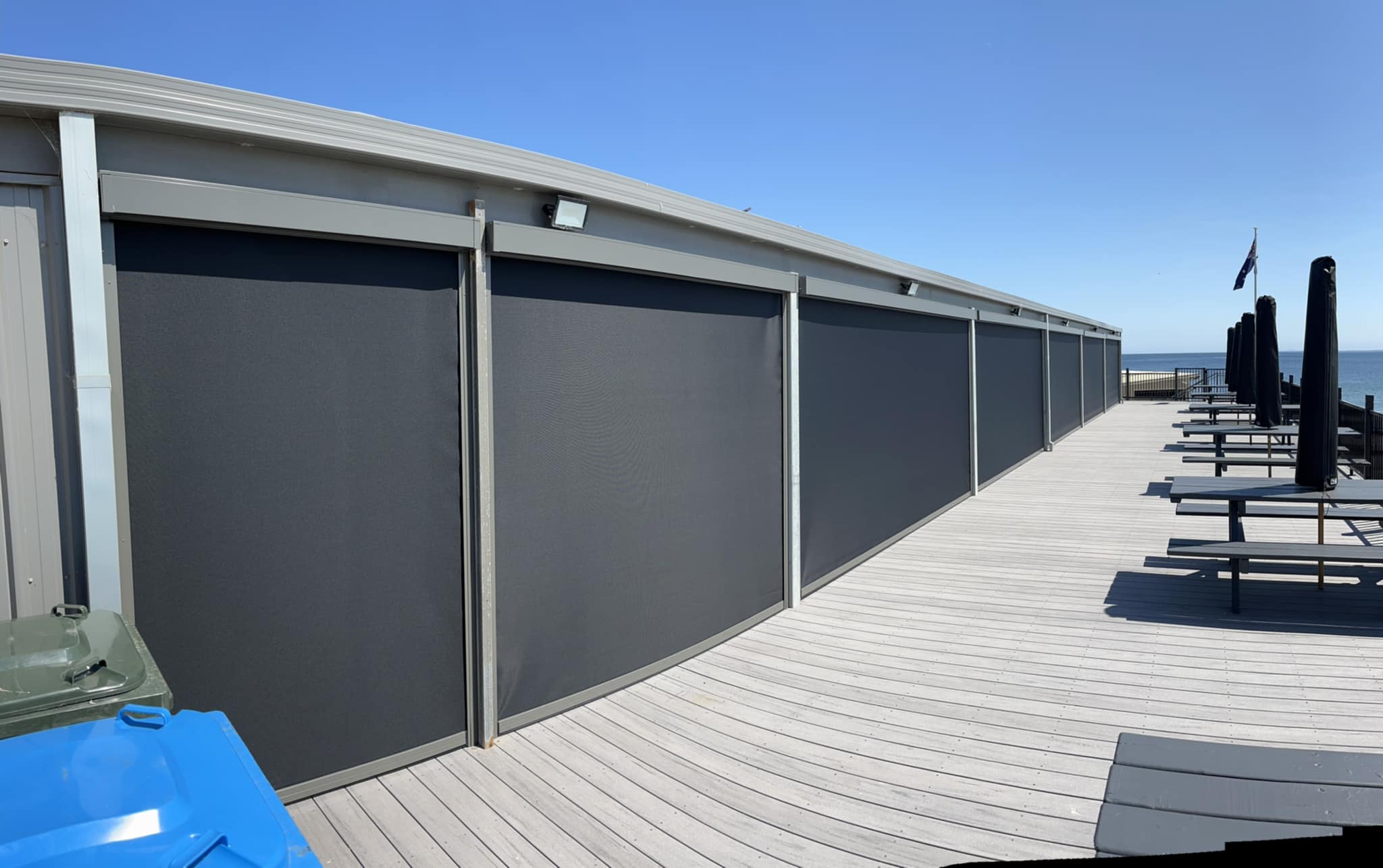
Glass is the weakest thermal point in almost every home: a large share of unwanted summer heat comes in through windows, and a meaningful share of winter warmth leaks back out the same way. That is bad news for energy bills and good news for window furnishings, because covering glass well is far cheaper than replacing it. Here is what actually works, season by season, in Peninsula conditions.
Summer: stop the heat before the glass, or at it
The most effective move is to stop sun before it touches the glass. Once radiant heat is through the window, it is in the room and you are cooling it rather than preventing it.
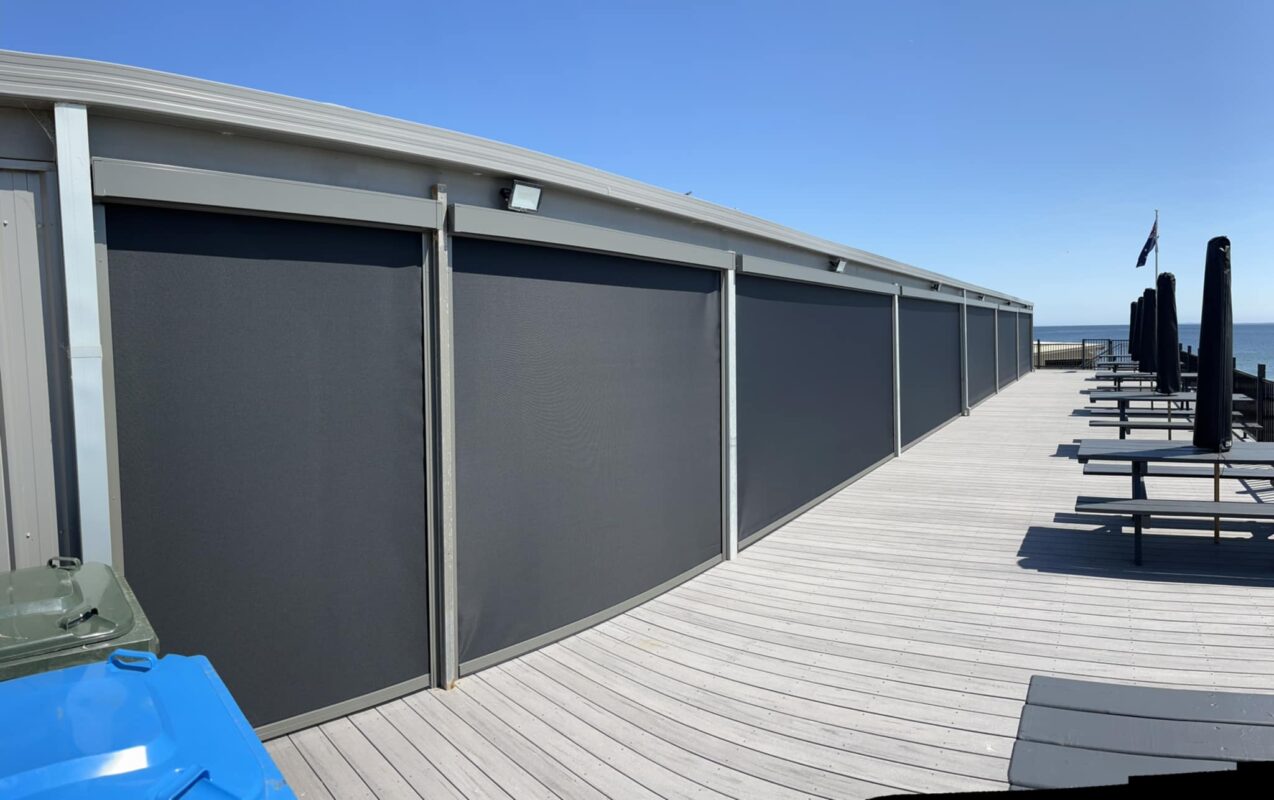
That is the case for external screening. A Zipscreen over west-facing glass or across the alfresco intercepts heat outside while keeping airflow and a view. It is the single biggest lever available, and it is the one most people overlook because they think of blinds as an interior product.
Inside, sunscreen roller blinds cut glare and a good portion of heat while preserving the outlook — the right answer for bay-view living rooms from McCrae to Safety Beach. Blockout blinds and closed shutter louvres do the heavy lifting on the worst afternoons in rooms where the view matters less.
Winter: trap a layer of still air
Warmth is kept by holding still air against the glass. The mechanism matters, because it explains why some furnishings work and some do not.
Heavier curtains do this well — and dramatically better with a pelmet over the top. Without a pelmet, warm room air circulates over the curtain, slides down the cold glass, cools, and returns to the room. It is a convection loop that quietly drains your heating all night. A fitted pelmet closes that gap.
It is unfashionable advice, and a fitted pelmet is one of the cheapest thermal upgrades a home in the cooler hinterland — Red Hill and Main Ridge — can make. Shutters help too: closed louvres add an insulating layer, and layered furnishings (a sheer plus blockout, or a shutter plus a drape) compound the effect.
Which rooms should you do first?
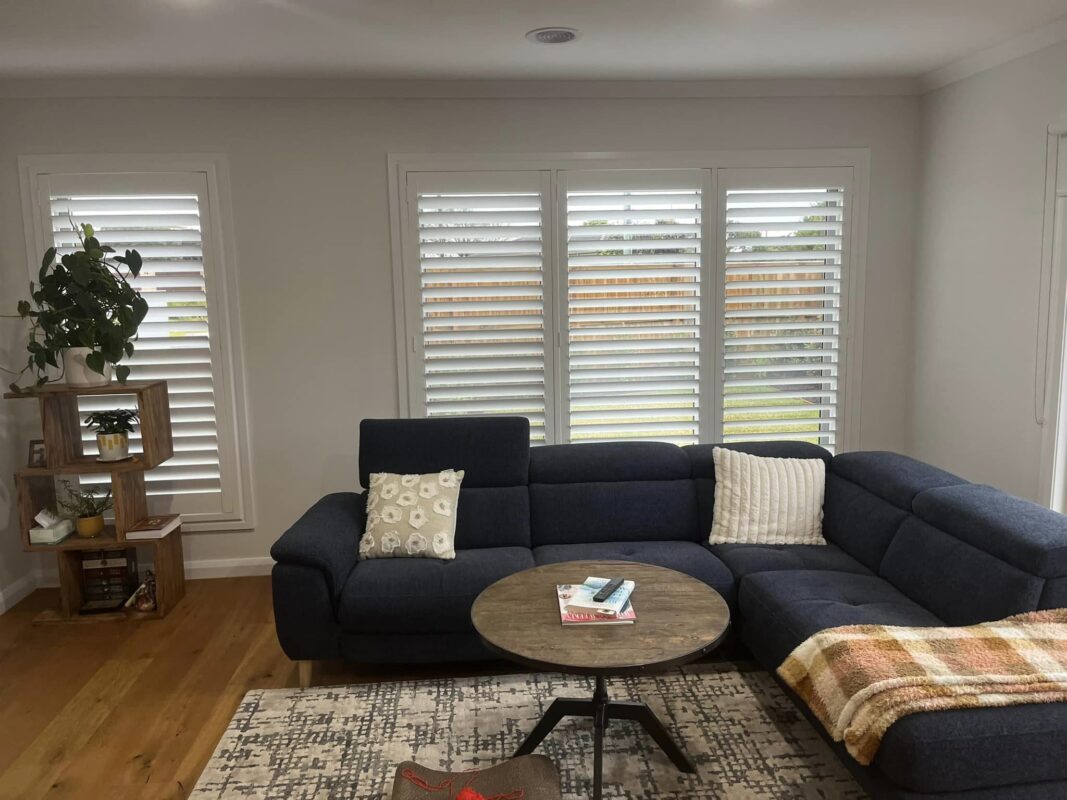
- The room with the biggest west-facing glass. Worst summer offender, usually the living area, and usually the room you already avoid between three and six.
- Bedrooms. Comfort where you sleep, and blockout doubles as heat control on morning-sun windows.
- Any room you already avoid in summer or heat constantly in winter. The room is telling you where the loss is — you do not need a thermal camera to find it.
An honest note on numbers
You will see precise percentage claims in this industry. Treat them cautiously, ours included. Savings depend on your glass, your orientation, how well the house is sealed and how you actually live in it, and a figure from a manufacturer’s brochure was measured in conditions that are not your house.
What we will stand behind: cover bare north- and west-facing glass properly and you will feel the difference on the first hot afternoon, and pelmeted curtains make a cold room noticeably easier to keep warm. Both are cheap next to double glazing.
Common questions
Do blinds actually reduce energy bills?
At the window, yes, noticeably — though the size of the effect depends on your glass, orientation and habits, which is why we are wary of quoting percentages. The mechanism is real: external screening stops radiant heat before it enters, and interior furnishings trap still air against the glass. Neither is a substitute for insulation, and both cost far less than replacing windows.
What is a pelmet and do I need one?
A pelmet is a boxed head over the top of a curtain that closes the gap between the curtain and the wall. It stops warm room air circulating down the cold glass and back into the room. For a curtain used for warmth rather than looks, it makes a substantial difference and costs very little.
Are shutters or curtains better for keeping heat in?
A pelmeted curtain generally edges out shutters for pure winter heat retention, because fabric plus a closed head traps more still air. Shutters win on flexibility, because you can tilt the louvres to control light and airflow separately, and they perform in summer as well. Layering both is the strongest option.
Is external screening really better than an internal blind?
For summer heat, yes, and by a clear margin. Once sunlight passes through the glass, the heat is inside the room and an internal blind can only absorb or reflect some of it back. An external screen intercepts it before it gets in.
What about rooms that are shaded most of the day?
Those rooms need light, not heat control. Translucent fabric keeps them bright while giving privacy, and it is the wrong place to spend on blockout. This comes up constantly in tree-canopy suburbs like Red Hill and Blairgowrie, where two rooms in the same house need opposite answers.
Get orientation-by-orientation advice for your house
A free measure comes with a walk through the actual rooms, aspect by aspect. Call 0418 994 068 or book online.